Best Freestanding Punching Bags for Apartments in 2026
Updated on Sep 28, 2026
Freestanding punching bags are a smart apartment-friendly alternative to ceiling mounts because they’re portable, compact, and easier on walls and neighbors. For apartment use, the “best” bag is the one that stays stable in a small space, keeps noise and vibration under control, and won’t punish your floors, especially if you add basic floor protection like a thick rubber mat or interlocking foam tiles under the base.
Best Overall
1

9.8
ProductLust
Score
Score
Century Wavemaster XXL Training Bag
- Big strike zone that feels legit for kicks without needing extra space around a hanging chain.
- The heavy, fillable base is what keeps apartment sessions from turning into a bag sliding across the room.
- Dense foam does a better job of softening impact than most budget bags, which helps with noise/vibration.
2

9.3
ProductLust
Score
Score
Century Versys VS.1
- Narrower footprint than the typical “round base + cylinder,” so it fits tighter corners.
- Better for angled strikes and combos where you don’t want to fight a giant base under your stance.
- A solid pick when floor protection matters—less base bulk to grind into your flooring.
3

9.1
ProductLust
Score
Score
Everlast Freestanding Adjustable Heavy Bag
- The flex-style core helps reduce harsh rebound, which can make training feel smoother in small spaces.
- Compact base design is easier to place in an apartment layout than many oversized bases.
- A practical “punch-first” bag that’s easy to live with if noise control is a priority.
4

8.9
ProductLust
Score
Score
Everlast Omniflex Freestanding Heavy Bag
- The Omniflex neck design is built to absorb impact, helpful for reducing floor-transmitted thump.
- Good option for apartments where you want less bag “snap-back” and more controlled movement.
- Works well when you’re pairing it with floor protection and want a calmer, less jarring feel.
5

8.6
ProductLust
Score
Score
Century The Original Wavemaster
- Classic freestanding concept: simple setup, fillable base, and easy to roll out of the way.
- A strong choice if space is tight and you want a straightforward bag without extra parts.
- With a proper mat underneath, it’s easier on floors than constant sliding from lighter bases.
6

8.4
ProductLust
Score
Score
Ringside Reflex Fitness Bag
- Smaller training footprint than most freestanding heavy bags, good for apartment space planning.
- Better for timing, accuracy, and lighter contact sessions when noise is a serious concern.
- Base-fill design helps stability, and a mat underneath keeps floor protection simple.
Best Value
7

8.2
ProductLust
Score
Score
Dripex Freestanding Punching Bag (47")
- Strong value if you want a functional stand bag without paying Century-level prices.
- Suction-style base can help reduce sliding, especially on smooth floors with proper floor protection.
- A good “starter apartment bag” if you’re realistic about stability versus premium models.
Most Popular
8
8.0
ProductLust
Score
Score
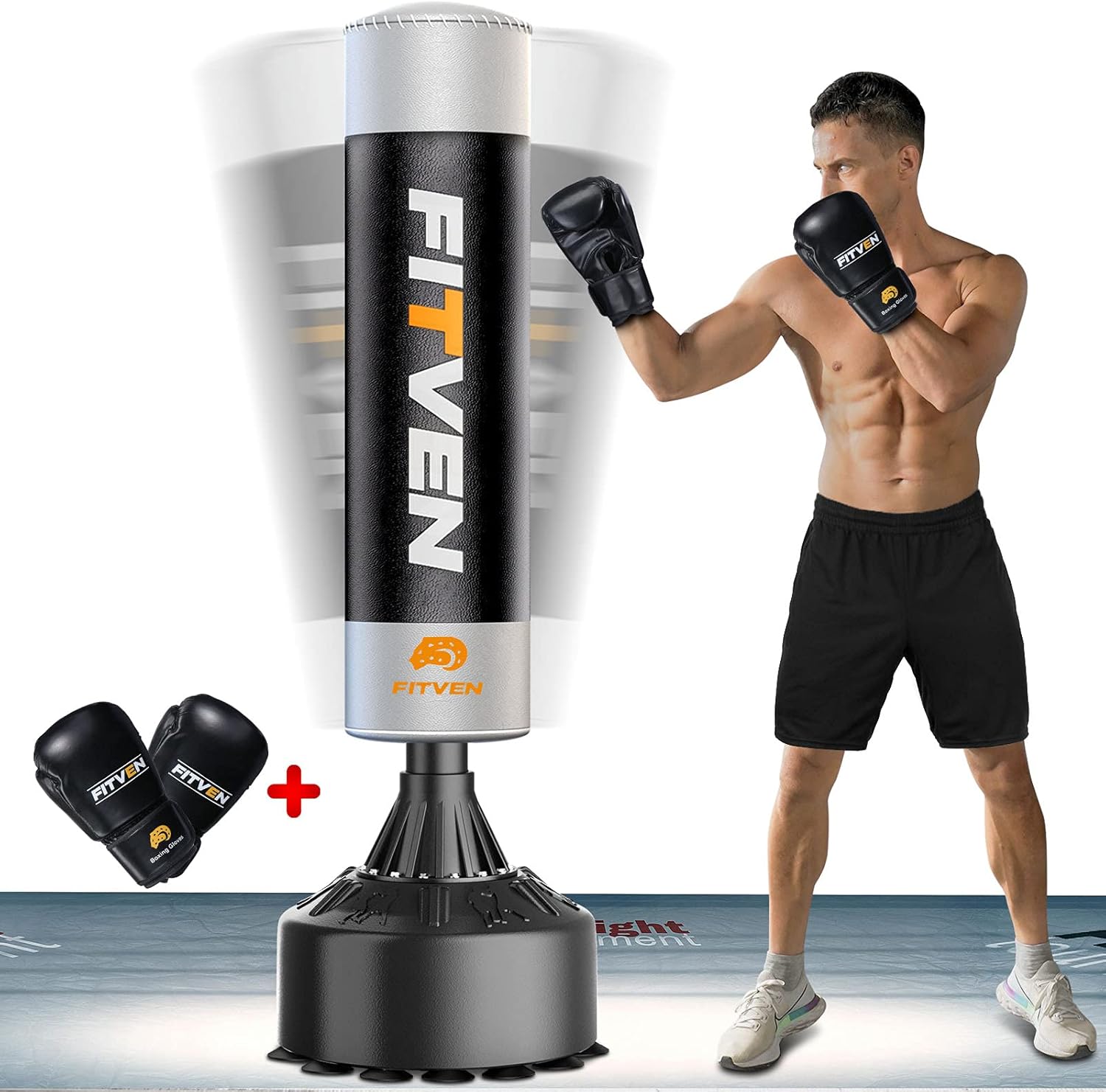
FITVEN Freestanding Punching Bag with Gloves
- Popular all-in-one kit approach (bag + gloves) for quick apartment setup.
- Suction-cup base design is aimed at reducing drift, still best paired with a mat for floor protection.
- Best for moderate-intensity sessions where noise control matters more than “gym-level” rigidity.
Explore other best lists
References
About this list
Last Updated
Sep 28, 2026
Number of items
8
How we came up with this list
These sources provide comprehensive reviews and ratings based on noise level, build quality and size. We identified models like the Century Wavemaster XXL Training Bag, Century Versys VS.1 and Everlast Freestanding Adjustable Heavy Bag as the best options in this price range.
Frequently asked questions
The best freestanding punching bag for apartments is one with a stable, fillable base, dense shock-absorbing foam, and a footprint that fits your available space. Apartment-friendly models prioritize low noise and reduced vibration while still feeling solid for boxing and kickboxing.
Often, yes. A freestanding heavy bag avoids drilling into ceilings or walls, is easier to move in a small apartment, and typically transmits less vibration through a building than a poorly mounted hanging setup.
Start with base diameter and overall height. In a tight layout, a narrower base and a slimmer bag body are easier to place without constantly stepping on the base. If you can’t dedicate a permanent corner, look for a model that’s easy to tilt/roll or reposition.
For most apartment workouts, a standard-height bag (roughly chest-to-head striking range) is ideal. Taller, “XXL” style bags are better for kicks, but only if you have enough clearance around the bag to move safely.
Noise usually comes from base thumps, floor vibration, and bag movement. Use a thick rubber mat under the entire base, avoid bare hardwood contact, and prioritize controlled technique over full-power swings—especially late at night.
A thick rubber gym mat is the most effective floor protection. Interlocking foam tiles can help with scuffs, but rubber does more to reduce vibration and protect hardwood or vinyl from base abrasion.
Usually, yes. Carpet can reduce sliding, but it doesn’t fully prevent base grinding or vibration transfer. A mat improves stability, protects carpet fibers, and helps keep the bag from slowly “walking” across the room.
A dense bag with a fully weighted base placed on a thick rubber mat is the quietest combo. Reflex-style bags can also be quieter because they encourage lighter contact and movement over heavy thudding.
Use a rubber mat, fully weight the base, and make sure the floor is clean and dry. Sliding is usually a stability problem (not enough base weight) or a friction problem (no mat).
They can help on smooth, non-textured surfaces when the floor is clean and the base is properly weighted. They’re less reliable on textured floors, grout lines, or softer surfaces where suction can’t seal well.
Sand is heavier and generally improves stability, which can reduce sliding. Water is easier to fill and drain if you need portability. For apartments, stability usually matters more than convenience—many people prefer sand for less movement.
As heavy as you can reasonably manage based on your space and ability to move it. Under-filling leads to wobble, sliding, and louder impacts. A properly weighted base is the fastest path to a more stable, quieter session.
It can if placed directly on the floor. Over time, the base can scuff, compress, or grind into the surface. Floor protection (rubber mat) is strongly recommended for hardwood, laminate, vinyl, and tile.
Not always. Heavier usually means more stability, but it can also mean harder impacts and more vibration if you’re striking aggressively. The best apartment setup balances stability with shock absorption and proper floor padding.
A freestanding heavy bag is built for power and combination work. A reflex bag is built for timing, accuracy, and lighter strikes, often with a smaller footprint and potentially less noise—great if space and neighbors are top concerns.
Yes, if you choose a bag with enough height and a stable base. Kicks create more lateral force, so apartment kickboxing works best with a heavier base, a non-slip mat, and enough clearance around the bag.
You need room to circle, extend punches safely, and reset your stance without stepping onto the base. As a rule, plan extra clearance on all sides so you can move, pivot, and kick without hitting furniture.
A corner or wall-adjacent area can work if you still have clearance to move safely. Avoid placing it directly against fragile walls or next to items that rattle. A stable surface plus floor protection matters more than the exact spot.
It can if the base isn’t weighted enough or if there’s no mat to absorb impact. Most “apartment shaking” issues are solved by adding rubber flooring and increasing base weight.
For heavy bag work, use proper boxing gloves and wraps to reduce hand strain and keep impacts controlled (which also helps with noise). For lighter apartment sessions, you can size down slightly, but avoid bare-knuckle striking.
Focus on clean technique, tight combos, and controlled impact. You’ll get better conditioning and skill without the loudest thumps. Shorter rest intervals and timed rounds keep intensity high without relying on maximum force.
They can be, but you should prioritize noise reduction and floor protection. A rubber mat is non-negotiable, and controlled striking matters more than ever when you’re above someone else.
Wipe the bag down to reduce odor buildup, check the base cap and seals if using water, and periodically re-tighten any connections. If the bag starts to wobble more, re-check base fill and mat grip.
Budget models can work with the right mat and base fill, but midrange-to-premium options often feel more stable and absorb impact better. If noise and floor protection are priorities, spending more typically buys better materials and stability.
Avoid very light bases, thin padding that feels “hollow,” and designs that force you to constantly step onto the base. Also avoid setups that require drilling if you specifically need a no-drill apartment solution.
Yes. Beginners often benefit most from a stable, forgiving bag that helps them learn technique without wild rebound. Start with shorter rounds, controlled strikes, and proper gloves and wraps.
Prioritize dense padding, a fully weighted base, a thick rubber mat for floor protection, and a training style that emphasizes control. If you want the quietest option, consider a reflex bag or lighter-contact training sessions.