If you buy through a partner link, we may earn a commission.

Best Floor Mats for Home Gym in 2026

Updated on Feb 3, 2026

A great home gym floor starts with the right material for your training style. Rubber flooring is the gold standard for weight rooms because it delivers better impact attenuation, traction, and long-term wear than foam, while EVA foam tiles are a solid budget pick for light training, mobility work, and protecting finished floors. Below are the best floor mats for home gym setups you can buy on Amazon, prioritized for stability, shock absorption and noise control

Best Overall
1
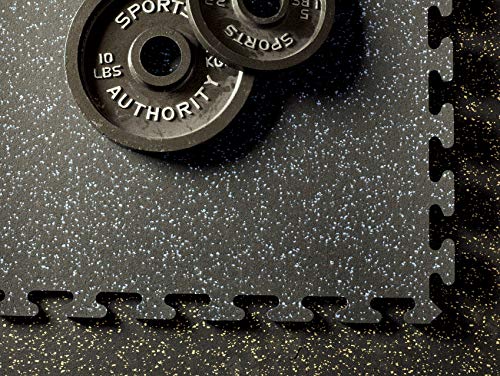
IncStores 8mm Thick Strong Rubber Flooring Roll
9.6
ProductLust
Score

IncStores 8mm Thick Strong Rubber Flooring Roll

  • Real gym-grade feel, not squishy foam.
  • Excellent vibration damping under racks and cardio.
  • Fast coverage for larger rooms with fewer seams.
Check Price
From Amazon
2
American Floor Mats Fit-Lock Heavy Duty Rubber Tiles
9.4
ProductLust
Score

American Floor Mats Fit-Lock Heavy Duty Rubber Tiles

  • Interlocking rubber stays put under lateral movement.
  • Cleaner edges than stall mats, more finished look.
  • Great traction when dusty, sweaty, or chalky.
Check Price
From Amazon
Most Popular
3
Rubber King Premium Large Exercise Mat
9.1
ProductLust
Score

Rubber King Premium Large Exercise Mat

  • Perfect for cardio zones and under benches.
  • Low-odor rubber, more home-friendly indoors.
  • Easy to trim for corners and tight layouts.
Check Price
From Amazon
4
Gorilla Mats Premium Large Exercise Mat
8.9
ProductLust
Score

Gorilla Mats Premium Large Exercise Mat

  • Huge single mat reduces seams and edge curl.
  • Grippy top layer feels stable for HIIT.
  • Protects hardwood and laminate from grit and scuffs.
Check Price
From Amazon
5
ProsourceFit Extra Thick Puzzle Exercise Mat
8.7
ProductLust
Score

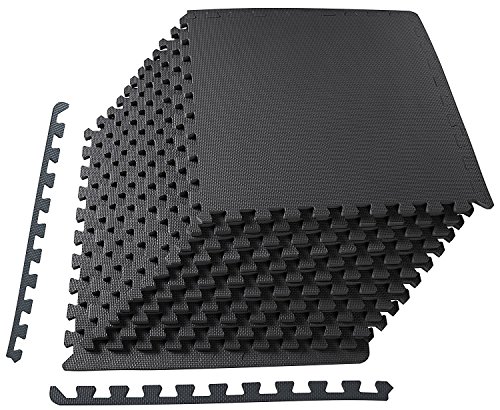
ProsourceFit Extra Thick Puzzle Exercise Mat

  • Soft landing for knees, planks, and floor work.
  • Quick install, easy reconfigure when you move.
  • Solid floor protection for lighter equipment.
Check Price
From Amazon
Best Value
6
BalanceFrom EVA Interlocking Foam Exercise Tile Mat
8.4
ProductLust
Score

BalanceFrom EVA Interlocking Foam Exercise Tile Mat

  • Best budget coverage for big basement gyms.
  • Comfortable cushioning for yoga and mobility days.
  • Wipes clean fast, good for multipurpose rooms.
Check Price
From Amazon
7
CAP Barbell Interlocking Puzzle Mat
8.1
ProductLust
Score

CAP Barbell Interlocking Puzzle Mat

  • Textured finish helps grip when training in socks.
  • Simple starter kit for small gym corners.
  • Good noise reduction for light dumbbell work.
Check Price
From Amazon

Explore other best lists

References

  1. The Best Home Gym FlooringGarage Gym Reviews
  2. Best garage gym flooring with no budget?Reddit

About this list

Last Updated
Feb 3, 2026
Number of items
7

How we came up with this list

These sources provide comprehensive reviews and ratings based on build quality, size and effectiveness. We identified models like the IncStores 8mm Thick Strong Rubber Flooring Roll, American Floor Mats Fit-Lock Heavy Duty Rubber Tiles and Rubber King Premium Large Exercise Mat as the best options in this price range.

Frequently asked questions

For most garages and weight rooms, vulcanized rubber is the top choice. It provides high traction, better impact attenuation, and longer wear than EVA foam, especially under racks, benches, and heavy dumbbells.

Use 8 mm to 10 mm rubber for general strength training. If you regularly drop heavy weights or do Olympic lifts, move up to 12 mm to 20 mm, or add a dedicated lifting platform to improve shock absorption and reduce subfloor stress.

They can be, but only for low-impact training like yoga, mobility, and light dumbbell work. EVA tiles compress under point loads, so they can dent under squat racks, heavy benches, and machines with small feet.

Yes. Rubber has higher damping than foam and helps reduce structure-borne vibration from treadmills, rowers, and lifting. Thicker rubber plus fewer seams typically improves perceived noise control.

They help, but the key is surface grit and point loads. Choose a mat with a stable base, clean the floor before installation, and avoid heavy equipment on thin foam. For heavy machines, use thicker rubber and add furniture cups if needed.

Rolls are best for full-room coverage with fewer seams. Large mats are ideal for cardio zones or a bench area. Tiles are the most modular for odd-shaped rooms but can separate if the locking edges are low quality.

Not exactly. Stall mats are tough and affordable, but they often have inconsistent thickness, heavier odor, and rougher edges. Purpose-built gym rubber is usually cleaner, more uniform, and easier to fit for indoor use.

Measure the equipment footprint and add clearance for stride and safe step-off, typically 6 to 12 inches on each side. For treadmills, a longer mat helps catch dust and belt debris that can scratch floors.

Start with a clean, dry subfloor. Use double-sided carpet tape on the perimeter, seam tape between sections, or edge ramps for high-traffic transitions. Heavier rubber naturally creeps less than foam.

Recycled rubber can off-gas, especially when new. Air them out in a ventilated space, wipe with mild soap and water, and give it a few days. Low-odor blends and indoor-rated rubber tend to be more home-friendly.

Rubber is the safer pick because it handles temperature changes and humidity better than foam. If moisture is frequent, consider a vapor barrier beneath the flooring and keep seams tight to prevent grit and moisture intrusion.

Vacuum or sweep regularly to remove grit, then mop with a pH-neutral cleaner. Avoid harsh solvents that can dry out rubber. For foam tiles, use minimal water and ensure they dry fully to prevent odor buildup.